

This outwardly over-the-top filmic journey through the life-altering beauty choices of an aging Hollywood star is actually the most relatable film of the year. If you’re a woman.
Διαβάστε το άρθρο στα ελληνικά εδώ.
The protagonist, Elizabeth Sparkle, played masterfully by Demi Moore is a TV aerobics queen a la Jane Fonda. We see her empire and longevity captured in an impossibly long hallway at the tv studio lined with posters of all the iterations of her morning show. She ironically ends each show with a wink and a kiss, telling her audience at home to, “take care of themselves”. As the story unfolds we see the extremes women go through in the name of self care. And the results are, shall we say… monstrous.

Words: Lauren Demarest
The notion of self-care has been a pervasive one in the media over the past few years, and can range from meditation and a bubble bath, to semiannual Botox injections and hyaluronic lip fillers. As women, we have been bombarded with messaging that proclaims that in order to care for one’s self and show love to one’s self, we must live in a never-ending cycle of consumerism and body shame. It’s a multi-billion dollar global industry. We all know that. Yet we persist in the pursuit of a “better” self against our better judgement. We all know that injecting nerve toxins into our foreheads sounds like a terrible idea. That injecting Ozempic to attain a malnourished-looking level of skinny perfection kills the joy centers associated with food in the brain. It’s clearly not healthy. For our bodies. Our minds. Or our souls. Yet show me a modern woman who doesn’t feel societal pressure to look her best, and I’ll show you a damn liar.

In the film, we see the absolutely flawless Elizabeth Sparkle finish her workout taping, glowing like a fitness goddess. She heads to the bathroom where she overhears the head of the network on the phone saying that she’s too old and that they need to inject the show with young blood. The not-so-subtle jabs at the concept of the male gaze and the role it plays in shaping female beauty ideas and ideals is biting and feels depressingly spot-on throughout the film. Dennis Quaid is perfectly disgusting as the movie’s embodiment of all things male.
Distraught and distracted after hearing that she’s so easily replaceable after all these years, she is in a car crash that puts her in the hospital. Despite being told she made it out of the accident without a scratch on her, she sobs tears desperate enough for the young doctor to slip a note and a thumb drive into her pocket, sending her on a self-destructive path toward a more youthful, beautiful self.

The promises made by the commercial on the thumb drive aren’t really much different from any commercial for Botox, plumping lipgloss, or push-up bras. Unleash the best version of yourself. Elizabeth, like all of us, take the bait. She winds up with an innocuous box from an Amazonesque locker hidden in a seemingly abandoned warehouse. How many of us have gone to these extremes? Sketchy offices with sketchy practitioners using sketchy drugs. How many times have you read about botched back-alley jobs? The fake fillers. The BBL gone awry. The influencer aesthetician who never went to school.
Inside the box, Elizabeth finds her Substance starter kit. The nations’ epidemic of Diabetes drug Ozempic misuse felt like the clearest of similes to draw from this film. Like Ozempic, “The Substance” is a self-administered shot. There is little information, and Elizabeth has zero awareness of any of the effects, side effects, or dangers. Like any of us read the two-page spread of small print legal copy associated with anything we’ve endeavored to try in the name of beauty. We do not.
What happens next is crazy. Her “better self” wriggles around inside her as she writhes in pain, finally emerging from her back like an alien. Enter Margaret Qualley as Sue. Which sounds suspiciously like “you”. While Demi Moore looks a good 10-15 years younger than her actual age of 62, she has the typical calling cards of age. A butt less perky than when she was 30. A tummy less taught. But Sue emerges spectacular. Though Margret is 30, Sue looks 18. Perky boobs. No cellulite. The ideal from every magazine we’ve ever opened or post we’ve ever double tapped.
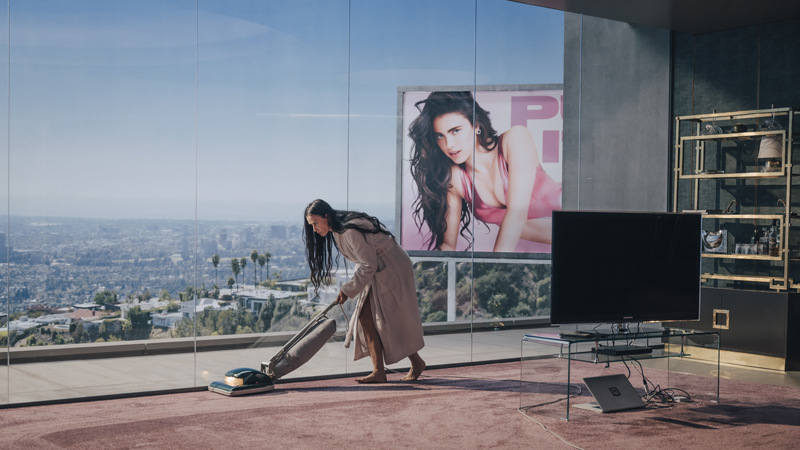
Now we get into the tricky idea of duality. Both these women read in The Substance starter kit than they are one. But as we watch, we learn that this oneness is conceptual as they share neither a body nor a brain. This kind of alternate self or other self is most similar to that in Apple TV’s Severance with Adam Scott – where the characters in the office have a “work self” and a “home self”. Because their brains have been surgically severed, never shall the two selves be aware of what the other’s life is like.
In The Substance, the duality is expressed by the younger Sue getting out there – taking over Elizabeth’s workout show, and essentially capturing the hearts of America. She’s on the cover of Vogue. She’s booked the coveted spot on the network’s New Year’s special. While her counterpart Elizabeth rots at home. Watching TV. Letting her self-esteem erode away completely.

Studies have shown that among young people, they increasingly put more importance on their digital selves and their digital life than on their real lived lives. They are literally only “living for The Gram”. ‘If you didn’t post, did it happen?’, is their mantra. We read every day about the toll this takes on the mental health of the world’s youth as they struggle with depression and self-esteem issues rooted in Instagram, TikTok, and the like. Hence the Sue you show the world has value. Social currency. The Elizabeth you lock away does not.
At one point Elizabeth is so petrified by not being perfect that she ghosts a date she was really looking forward to. She preps for the dinner with sky-high heels, a sexy little red dress, and stunning hair and makeup. Undeniably a star. But with a picture-perfect billboard of Sue staring Elizabeth down in her LA penthouse apartment, she feels less and less beautiful every time she sees it, eventually smearing her makeup in a moment of pure self-hatred.
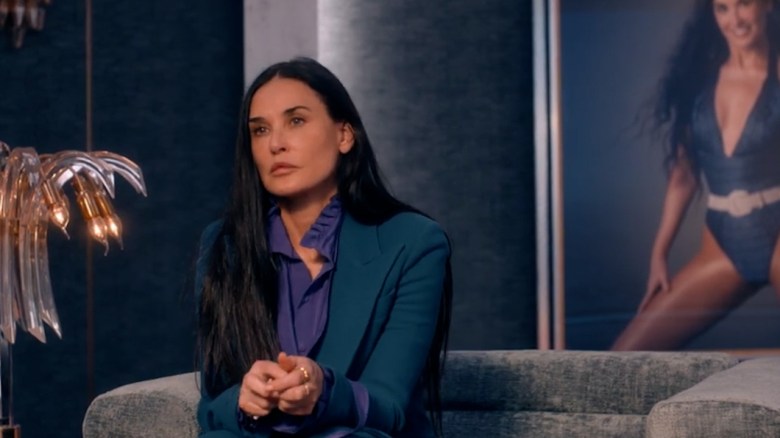
But the real turning point comes when the same pressures that deadened Elizabeth’s sparkle begin to prey on Sue. In a moment of desperation, she also injects The Substance, hoping to unleash a better version of herself, reminding us that attaining perfection is rarely enough. It’s the human condition to want more. To never be satisfied. And what emerges from her back is terrifying. What ensues is a campy blood bath that defies any and all expectations. This is what happens when we go to extremes. How many beautiful women have you seen deform themselves with plastic surgeries in their quest for youth? Becoming horrific plastic caricatures of what they think women are supposed to want and be.
Interestingly enough, we saw this behavior from Demi Moore not so long ago, looking unrecognizable at Paris fashion week in 2021. Confronting this misstep and satirizing it in this role took courage and humor, and she deserves an award for her performance. As a woman, a monster, and eventually playing a glob with a face, she is terrific. Seriously the role of her career. The Substance is not to be missed. See it.
 notesfromlife