

Currently available online through the 65th Thessaloniki Film Festival’s web platform, the short film, How to Create a Friend offers viewers an intimate and visually stunning exploration of friendship and grief. This captivating animated film, created by directors Jinfei Ge, Bin He, Myrtille Huet, Julie Jarrier-Stettin, Yuqiang Zhang, brings to life the story of two unlikely friends whose bond helps them cope with loss and loneliness. In this interview, the directors discuss the inspiration behind their film, their creative process, and the unique challenges they faced in visually capturing such sensitive themes. Through their collaboration, they’ve crafted a narrative rich in emotion and artistry that speaks directly to the heart. Don’t miss the chance to experience this beautiful story at Thessaloniki’s Film festival, online page.
Διαβάστε την συνέντευξη στα ελληνικά εδώ.
Interview: Georgia Skondrani
What inspired you to choose friendship and grief as the central themes of your animated film? Was there a personal story behind it?
We initially wanted to start with two very classic character archetypes: one character is a bit silly and clumsy, while the other is always a bit sad. This dynamic reminded us of friendships we’ve all experienced in some way, and it naturally led us to focus on friendship as our theme. In the earliest concept, one character was an inventor who wanted to create a “friend,” and from that idea, the story gradually took shape.
Creating an animated film that explores such deep emotions is unique. What challenges did you face in visually representing these feelings?
We wanted to achieve a richly textured, storybook-like look, so using 3D was essential. However, maintaining that textured feel imposed many limitations on animation. For example, in scenes where characters stretch, the texture effect had to be softened to avoid looking distorted. Additionally, to create exaggerated expressions, we had to paint over the 3D models to make them look more 2D. This process increased the workload, but it allowed us to convey emotions in a unique and impactful way.
In your creative process, were there any particular visual or cinematic techniques that you used to emphasize the film’s themes?
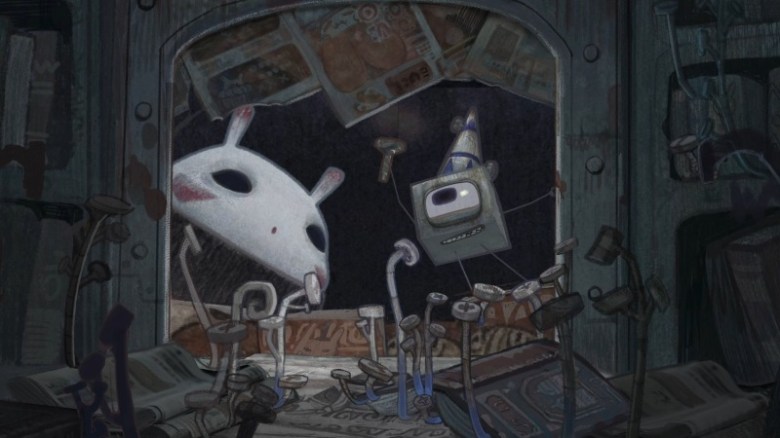
We put a lot of thought into the lighting and color scheme. Soft, low-contrast lighting combined with cooler-toned backgrounds helped create an atmosphere of longing and loneliness, which was especially effective in scenes where we wanted to emphasize a character’s sadness or sense of loss. In contrast, warmer colors and softer lighting conveyed the comfort of friendship. We also designed the world to resemble moo’s mental space: it starts off desolate, but as Yuu joins her, life gradually appears. In the middle and end of the film, little creatures can be seen in the corner of the background, symbolizing moo’s shift from isolation to curiosity about the world. In the end of story, the scene where the robot turns into a shooting star symbolizes moo’s journey out of her grief and her goodbye to the past. These visual choices gave the story a more poetic and emotionally resonant quality.
Animation allows for unique storytelling freedom. How did you use this medium to create a more impactful narrative around these sensitive subjects?
We exaggerated the character designs to emphasize their personality differences. Moo features more rounded shapes, while Yuu has more angular forms. This contrast visually reinforces their distinct traits and enhances their relationship dynamics. We also used exaggerated facial expressions to visually convey feelings, so the audience could sense these emotions directly. For instance, when Yuu tries to become moo’s friend, his nervousness and eagerness are vividly portrayed through his expressions.
As a team, what was the most rewarding part of creating this film? Were there any moments during production that you felt especially proud of or connected to the story?
At the beginning, our story development was progressing a bit slowly. So, during a holiday, we gathered in a beautiful countryside, we not only worked on the story but also built deeper friendships and got to know each other better. It was there that we came up with the idea of creating a small story of friendship together, which really strengthened our collaboration. This was the only time we spent so closely together, making it an unforgettable experience.
How did you all collaborate on this project? Were there specific roles each of you took on, or was it a more fluid, collective process?
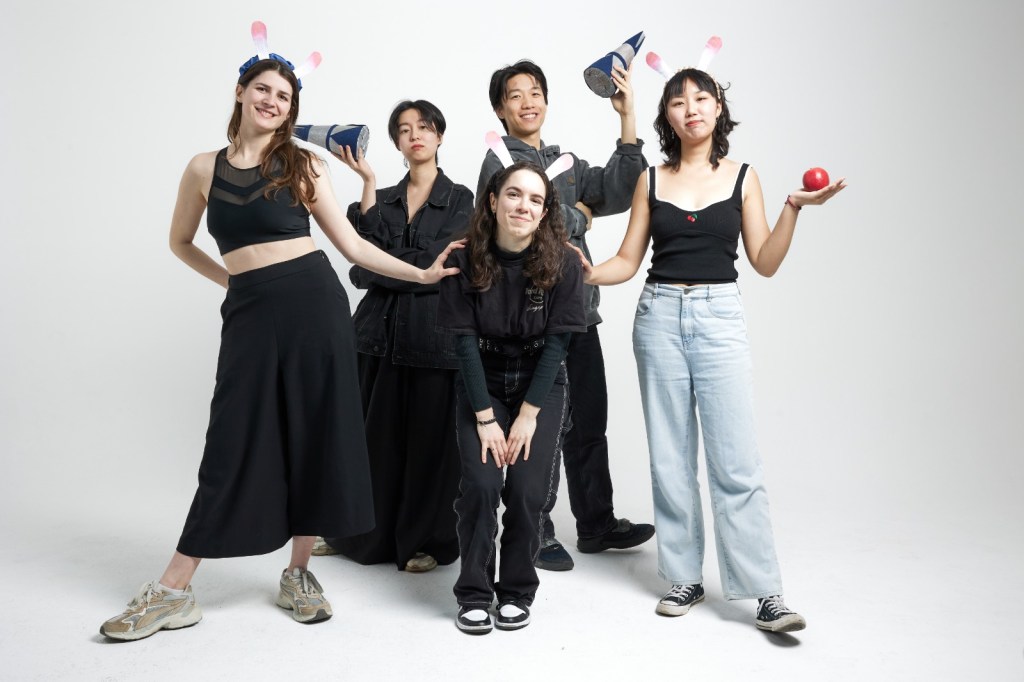
We had clear roles, though responsibilities shifted somewhat with each phase. In the early stages, Julie and Yuqiang handled concept design, Bin focused on creature design, Jinfei worked on script writing and rigging. Myrtille worked on storyboarding. In the middle phase, Myrtille, Bin, and Jinfei were primarily responsible for animation, while Julie and Yuqiang focused on backgrounds. Finally, post-production was mainly managed by Julie and Bin.
Are there any future projects in the works where you’d like to explore similar or other emotional themes?
Yes! Emotional themes are something we constantly strive to explore. Although we each have our own career paths and passions within the team. For example, some of us are drawn toward animation, while others are more passionate about concept design, or storytelling, but we all love sharing our emotions and embedding them into our work.
Watch the film How to Make a Friend? online here
 notesfromlife