
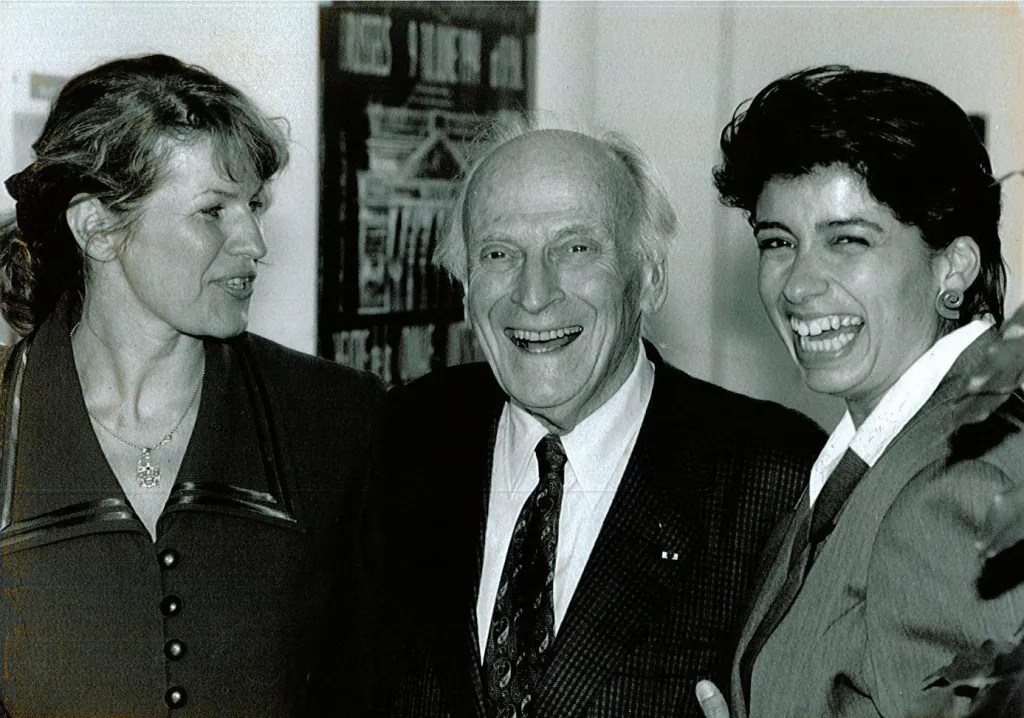
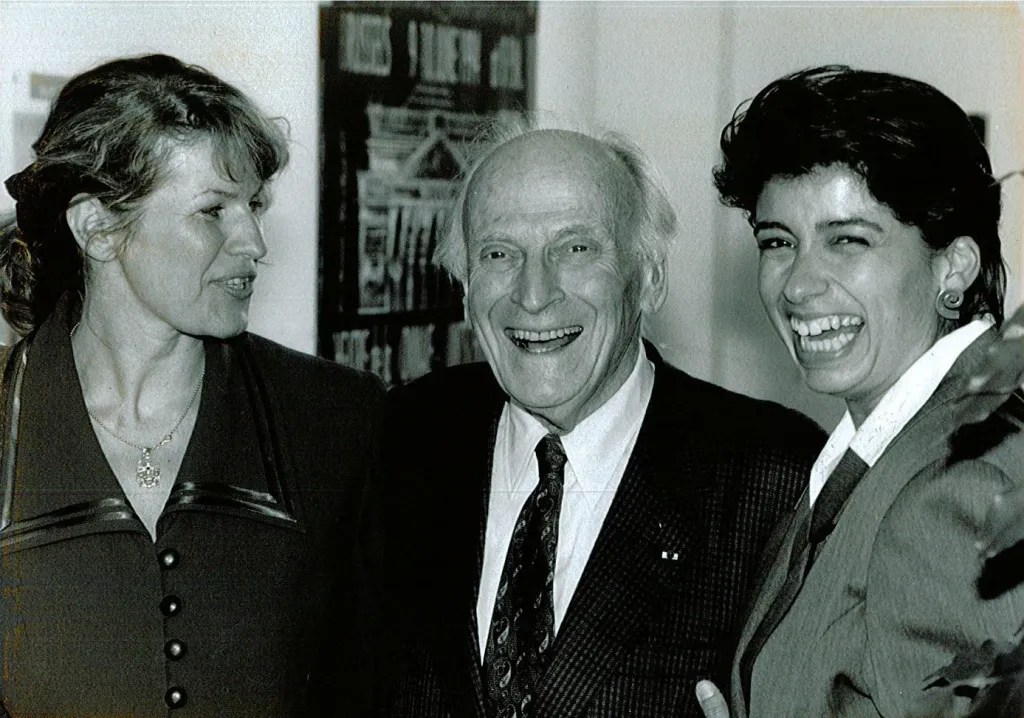
Yehudi Menuhin, born in 1916, was a world-renowned violinist and conductor. He was one of the most celebrated and influential musicians of the 20th century. Menuhin began his career as a child prodigy, making his debut as a solo violinist at the age of seven. Throughout his life, he performed with leading orchestras and conductors, captivating audiences with his virtuosity and expressive playing. Beyond his musical talent, Menuhin was a passionate advocate for humanitarian causes. He believed in the power of music to bridge cultural divides and promote peace.
Menuhin established the Yehudi Menuhin International Competition for Young Violinists in 1991, and founded the Menuhin Academy, nurturing young talent. As one of the greatest violinists and humanists of the twentieth century, Yehudi Menuhin always believed that arts and creativity must have a central place in any process of personal and/or societal development.
Established in 1991 by Yehudi Menuhin and Executive Vice Président and co-founder Marianne Poncelet the International Yehudi Menuhin Foundation (IYMF) is registered as a non-profit association by royal decree. In 1993 Werner Schmitt (IYMF Vice-President), Marianne Poncelet and Yehudi Menuhin created the MUS-E programme. Since 1993, MUSE-E associations have developed operations in 13 countries involving 61000 children and up to 500 schools. Over the years, we’ve crafted a wealth experience in implementing the use of creating arts in traditional primary schools working particularly with children from disadvantaged backgrounds.
Yehudi Menuhin died on March 12 1999, of a heart attack in Berlin at the age of 82, leaving a legacy that extends beyond his musical contributions. He was honored with numerous awards and accolades for his commitment to social justice and his contributions to the world of classical music. Marianne Poncelet talked to NotesFromLife about the International Yehudi Menuhin Foundation, its mission today, the great violinist’s legacy, and his ties to Greece.
Interview by Georgia Skondrani

What is the mission and main objectives of the International Yehudi Menuhin Foundation, and how has it evolved since its establishment?
The International Yehudi Menuhin Foundation (IYMF) was created in Brussels in 1991 by Yehudi Menuhin, one of the greatest violinists of the 20th century, to realize his humanist dream of giving a voice to the voiceless through the arts, irrespective of background, and building a civilization of reciprocity.
This dream has been incorporated into our vision of fostering art and creativity in education and personal development for a more open, inclusive, and harmonious society. It is encapsulated as follows: – Every child deserves a chance. – Every human being has a voice. – Every culture has a channel of expression.
Since its setting-up, the International Yehudi Menuhin Foundation (IYMF) has used artistic expression (music, singing, dance, visual arts, etc.) as a tool for meetings among world cultures and has produced a European brand of high-level multicultural concerts touring in Europe and presenting stage concepts that involve various artistic forms in an innovative way (All the World’s Violins, From the Sitar to the Guitar, Voices for Peace, Travelling Voices, Voices to Share, Dancing Violins, etc.).
The IYMF has also established an informal artistic education network in Europe since 1993 entitled the MUSE programme (900 artists from all disciplines and all cultures working in over 540 primary schools and reaching over 57,000 children a year through their art). The aim of the MUS-E programme is to foster social inclusion of all children through the practice of the arts at school. In 2023, this programme exists in 10 countries in Europe: Belgium, Cyprus, Germany, Hungary, Italy, Kosovo, Liechtenstein, Portugal, Spain and Switzerland, Israel and Brazil.
The Foundation’s artistic, educational and cultural actions are unique in their development and are mutually enriched by daily practice from artists in schools, their multicultural experiences, the on-stage celebrations of the richness of cultures and reflections on cultural diversity together with reflections on the protection of these cultures and the enhancement of their value, especially at a time when the principle of diversity and the acceptance of multiple identities seem to create a new, favourable environment for the cultures that make up
the European mosaic. These actions make it possible to manage an ever-increasing multiculturalism on a daily basis in Europe and contribute to integrating young people and developing their multiple identities.
The IYMF brings together artists, children, teachers, project leaders, partners and cultural experts who share the vision and ethics of the great humanist violinist Yehudi Menuhin («we live in a period of time when change is required for survival. Growing controversy and confrontation must be abandoned in favour of complementarity, solidarity and reciprocity»).
Since its creation, the IYMF has developed numerous successful European projects with the support of the DG EAC, among others.
Since 2018, the Foundation is also active in the field of social inclusion of young refugees through the practice of the arts and launched two projects in that field: the HOMELANDS Project and the INSIDE project, which the Foundation coordinates Belgium in its pilot phase.

Yehudi Menuhin was a renowned violinist and humanitarian. How does the Foundation continue his legacy and promote his values in its work?
Our mission is to actively contribute to intercultural dialogue and social inclusion at both national and international levels through the creative arts, by: – Enabling international exchanges and co-creation of emerging and established musicians and artists from lesser-known minorities – Promoting and implementing the use of creative arts to educate children from all backgrounds. The values we promote in all our projects are directly connected to Yehudi Menuhin: to share (our talents, our solidarity and our reciprocity), to respect (by fostering a wider understanding of all cultures with consideration for all), to trust (we cultivate self-confidence and trustfulness in all our endeavors), to create (through creating new concepts and by being at the service of the best possible inspiration for others), to innovate (by improving, surprising, marvelling, astounding, guiding, inspiring and empowering people) and to communicate (by exploring, discovering and conquering the many ways to convey our accomplishments in order to create harmonious cooperation in our multicultural environments).
Can you shed light on Yehudi Menuhin’s relationship with the island of Mykonos and any significant contributions he made to the local arts and culture scene there?
In 1961, Yehudi Menuhin bought his house in Mykonos. He wrote in Unfinished Journey, “We have respected the simplicity of our little peasant house. Built of stone, the roof insulated with straw and seaweed between narrow beams (for wood is precious on the island), with a distinctive little chimney, it is cool, white, clean and totally unspoiled. For a few years it was an idyllic summer holiday hermitage where one wore one’s oldest clothes, swam in the empty sea, daily collected steaming loaves of black bread from the baker’s brushwood oven, and took evening walks in, what Diana Goulld, his wife, called our supermarket – «our three terraces and the adjoining vineyard where grapes, figs, pomegranates, prickly pears, tomatoes, and quinces grew, these last usually full of worms”.
The Mayor of Mykonos Christos Varonis, back then, awarded Yehudi Menuhin and his wife honorary citizenship of the island on behalf of the Municipality of Mykonos, in a ceremony in the open-air Municipal Theatre of Lakka.
«My wife and I are grateful that officially and unanimously you made us feel that we are part of you, your country, your traditions and your heritage», Menuhin said in thanking. During the space of 31 years, they built strong bonds with Mykonian families like that of the unforgettable weaver Vgenoula Kousantha and many others. Domna Samiou, who has worked in the past with the great Musician, sped to participate in the award ceremony.
In 1994, Bruno Monsaingeon, famous for getting up close and personal to world-class artists in his documentaries, made a film on Yehudi Menuhin, entitled “Conversations with Yehudi Menuhin – Mykonos, June 1994”. In this invaluable historical document, he offers the audience an intimate portrait of living-legend violinist Yehudi Menuhin – talking about everything from his musical career, politics, his childhood and family and his work as an ambassador for peace and understanding in the world.

Also is in the Foundation’s plans to do an event or a festival in Greece or Mykonos about Menuhin legacy in Mykonos Island?
Talking with the Mayor Konstantinos Koukas and his cultural advisor, Vangelis Pelekis, we thought that it would be a great idea to organize an annual music festival for young people under the auspices of the International Yehudi Menuhin Foundation, to celebrate the presence of Yehudi Menuhin and his wife on the island. Of course, this event should include collaborations and exchanges between local traditional musicians and our artists ambassadors, as well as artistic workshops for children led by our artists.
How does the International Yehudi Menuhin Foundation collaborate with other
organizations and stakeholders to achieve its goals? Are there any notable partnerships or joint projects?
The International Yehudi Menuhin Foundation has created a network of national associations operating its MUS-E Programme (social inclusion of children in the primary schools of Europe through the practice of the arts) at national level. The Foundation coordinates this network at international level, by providing support for the international meetings of the MUS-E coordinators, by fostering exchanges and good practices, and by facilitating communication among its members, with the support of the Erasmus+ Programme.
Since its creation, the Foundation has developed numerous successful European projects with the support of the DG EAC, among others: “Nomadic Tales”, “Children from here, Tales from afar”, “IYOUWE Share the World” (flagship project of the European Commission for the Year of Intercultural Dialogue in 2008), “Sharing Voices”, “Voices for Tomorrow” and lately, under the LLP transversal programme Key Activity 1 – Promoting the Integration of Roma, the IYMF has successfully developed two projects: “art4ROM” and “music4ROM”, involving the cooperation of Roma and non-Roma partners institutions from several EU Member States, with
a view to improve Roma’s children access to education in line with the EU’s Lifelong Learning Programme and the Europe 2020 strategy, while fostering intercultural dialogue and social cohesion within formal and informal education environments. The Foundation was also the leader of META/Minorities Education through Art.
Furthermore, the Foundation has also been partnering in several other EU projects, such as E-ArtinEd, Multilib, Music Up Close, Arte por la Convivencia, We All Count, U-create and others.
The International Yehudi Menuhin Foundation is member of several European Networks, such as ENCATC, ATEE, Anna Lindh Foundation…which help to disseminate its activities in a European context and foster new partnerships.
The Foundation also developed a longterm partnership with the Tecnological University of Creta and recently has also initiated a partnership with the World Human Forum in Greece.
In what ways does the Foundation support and promote music education, particularly for underprivileged or marginalized groups? Are there specific strategies or initiatives aimed at increasing access to music for all?
The Foundation supports and promotes music (and art in all its forms) into education for children from underprivileged or marginalized groups through its MUS-E Programme.
The MUS-E initiative was created by Yehudi Menuhin in 1993, together with Werner Schmitt and Marianne Poncelet, IYMF Executive Vice President. It is based on a concept of music education developed by the Hungarian composer, ethnomusicologist, and teacher Zoltán Kodály, who believed that music should be part and parcel of daily education and accessible to all. Yehudi Menuhin broadened Kodály’s concept to incorporate all creative arts spanning all cultures. Since 1993, MUS-E associations in various countries have built up a
wealth of experience in implementing the use of creative arts in traditional primary school curriculums, working particularly with children from disadvantaged backgrounds.
MUS-E brings art to schools. In its present form, MUS-E is targeted at primary schools, mainly in Europe, which are facing the challenge of educating an increasingly multicultural group of children, many of whom come from migrant or disadvantaged families and are at risk of social exclusion or other societal problems. In the presence of classroom teachers, professional artists actively engaged in MUS-E introduce and share various forms of art (singing, dance, music, movement, drama, visual and multimedia arts, …). Thanks to this collective work, the MUS-E programme encourages dialogue and togetherness, while awakening children’s
sense of creativity, empathy, and resilience.
Three fields of activity interconnect within the MUS-E programme: artistic, pedagogical and social. Artistic: art is all too often given minimum attention in the school curriculum, but it is a powerful tool to awaken and stimulate children’s curiosity for learning. The MUS-E programme is a meaningful, effective, and unique addition to existing music and art classes offered by schools.
Pedagogical: MUS-E’s artistic approach to school education helps children to enjoy school as a place to learn and socialize. It also helps teachers to discover an additional teaching strategy focused on every child’s needs, abilities, level of development and cultural background. MUS-E activities are based on the premise that children have their own way of processing knowledge and culture, so that if schools can leverage this, they become key social agents. The partnership between teachers and visiting artists enables the teacher’s function of helping children in their quest for knowledge, overcoming the idea that the teacher is the only gatekeeper
of knowledge. Moreover, teachers can use the MUS-E experience and practice to support teaching other subjects on the school curriculum.
Social: the schools benefitting from the MUS-E programme are mainly located in lower income districts with few cultural stimuli and /or high concentration of diverse backgrounds. By triggering children’s creativity, their capacity for resilience to adverse social circumstances is strengthened. MUS-E optimizes the creative resources of the children and families, and the wealth of their cultural diversity.
In 2023, the MUS-E programme involve approximately 900 artists, 540 primary schools and 57.000 children per year.
The International Yehudi Menuhin Foundation coordinates the MUS-E Programme at European and International levels. This includes promoting and sharing good practices and common tools, plus facilitating international exchanges between participating schools and artists. To facilitate this coordination, the Foundation has created an International MUS-E Council (IMC) which builds on 30th years of experience this year.
Apart from the MUS-E Programme, the Foundation also provide on-going artistic workshops for marginalized young refugees in asylum seekers centers (the INSIDE Project) and public youth protection institutions in Belgium.
INSIDE is an artistic project with a social purpose, aimed at guaranteeing access to artistic activities for marginalised groups who are all too often isolated and excluded from cultural and artistic life, such as members of youth penitentiaries and inhabitants of refugee centres.
More than producing a finished artistic product, the aim of the INSIDE workshops is to create links between the participants, while strengthening the integration and sense of inclusion of the residents of the reception centre.
In 2023, the Foundation also created a Choir in support of Ukraine with children and youngsters from different cultures, including Ukrainian, to facilitate social inclusion through music and singing.
Photographs by: IYMF website.
 notesfromlife