By Lauren Demarest
Odysseus isn’t the only one who went on an epic journey in the theatre. Find your seat, and get ready to go on your own inward journey. This is a reflective story – in its screen form, and in its ancient poem form.
Christopher Nolan has gotten a lot of flack for not being 100% true to the original text. But I’m going to respectfully disagree with those who did not like this film. It was incredible. Here’s why I think you need to see it…
Let’s explore the plot, the themes, the characters, and the cinematographic stylistic choices. First off, the plot. Sure… some details changed. But I just reread the text two years ago, and it felt like all the salient plot points were included. Odysseus goes off to fight alongside the troops of Agamemnon in the war against Troy. And boy, is it uneventful for 8 years on the beach outside the city walls. Ick. Then Odysseus gets the bright idea to hide troops in a wooden horse and give it as a gift from Zeus to gain access to Troy. This violation of “Zeus’s Law” was a big no-no. This law is the unspoken rule of hospitality. It’s a “treat others the way you want to be treated” rule that commands that guests and travelers be given nourishment and shown respect. Because you never know when a traveler might be a God in disguise. This is what also keeps Penelope and Telemachus from simply throwing out the many suitors. And why, in the end, Odysseus is granted access to the palace dressed as a beggar.
So… The Gods are displeased about this horse trick to stay the least. The slaughter of Troy is… let’s say “successful”. And the Gods curse Odysseus and his soldiers as they attempt to return home to Ithaca. This journey is laden with Gods-induced trials and tribulations that result in conflicts that enrage the Gods even further. Among the trials depicted in the movie we see the blinding of the Cyclops in the cave, the battle with the giants, the irresistible pull of the sirens on the rocks, being turned into pigs by the witch Circe, avoiding the killer whirlpool, escaping the many-legged monsters Scilla, killing the sacred cows out of starvation, and wasting away in a combined side story of The Lotus Eaters and Calypso.
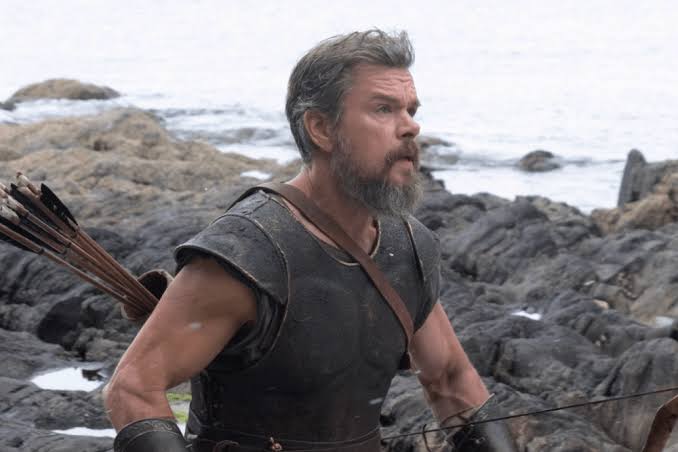
Yes. Some liberties were taken. But these were plot points meant to illustrate the bumps in the road on the long journey home. And in this way, the stories were all successful. I think it is important here to point out that each of these scenes could have easily been turned into their own feature films as part of a Marvel-esqe franchise, and could have easily been special-effects-laden, action-packed, hero-worship blockbusters. But what Nolan did was far more elegant. The action was tasteful and cinematic. The effects were in-camera and practical – which is MINDBLOWING. Each of these hardships served to capture the epic parts of the poem that represent a much deeper struggle than what we see on the surface.
These moments in Homer’s Odyssey are meant to be reflective. On your journey, who is the Cyclops blocking your path to freedom? A bad relationship or job that makes you feel trapped? Who or what are the giants standing in your way? What are the big obstacles that keep you from being able to move forward? What are the sirens in your life pulling you astray? A toxic friend? A bad habit or addiction? Are you able to see the true characters of the people around you? Are they really pigs when you get down to it? Can you see people for who they truly are? What whirlpool is dragging you down? Debt? A divorce? Anxiety? What is your manny-armed monster? Too many obligations to family or work constantly grabbing at you and trying to pull you from your joy, your path, or your future you’ve envisioned for yourself? What are your sacred cows? Something you know you can’t have or shouldn’t have? A desire for something or someone who is strictly off limits? And what is your lotus? The thing you turn to to help you forget? Going out? Meaningless dates? Food? Drugs? The Odyssey is technically about Odysseus. But it’s really meant to be about you and your journey.
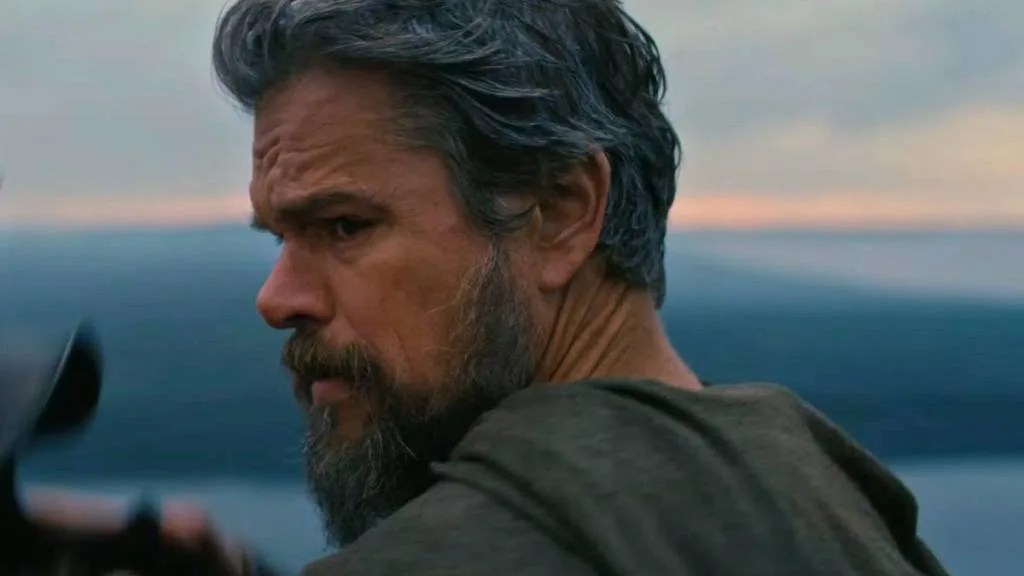
Ok. So about Odysseus. I liked the character shift made by Nolan. In Homer’s epic poem, Odysseus is highly unlikeable. He’s a super star general, brimming over with so much hubris that he defies the Gods with relish. He rubs his glory in their faces. He’s above the law. He’s the goddamn hero of the war. And he loves it. He sleeps his way around the Greek islands, laying waste to everything in his path. He’s a toxic “man’s man” and a textbook narcissist. And honestly, modern audiences have seen enough of this in their everyday lives. Viewers were ready to see the softer side of Odysseus.
And that’s exactly what Nolan gave us. His Odysseus is true to his wife Penelope, and deeply repentant for the atrocities of the war that he set in motion with his bright Trojan horse plan. He takes responsibility for all the lives laid to waste on both sides. And it’s a heavy one. He is literally confronted with the thousands of his men who followed him into war, and ultimately to their demise when Odysseus travels to the underworld. Here, he has to look into their faces, and explain himself to the men who trusted him blindly with their lives. And that war was brutal.
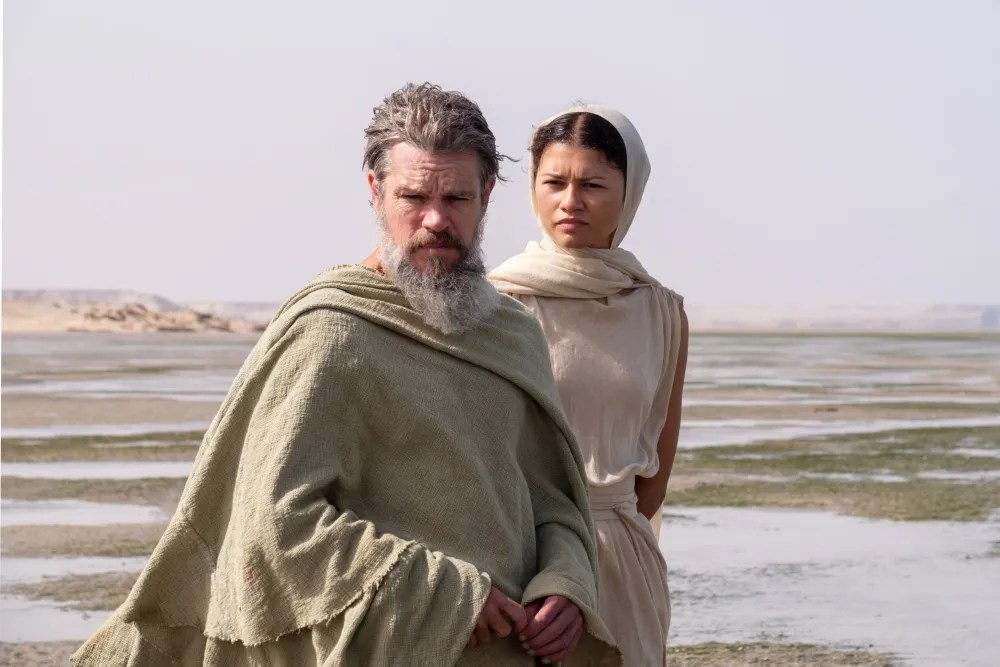
I liked that Nolan chose to use violence sparingly throughout the film until two key scenes. The first of these scenes is the sack of Troy. My God. Yikes. This peek into the ravages and sheer brutality of cold-blooded murder and war was so hard to watch. It was just so awful. And you could see that Odysseus feels this way too as the scene unfolds. Only it’s way too late now. And, oh yeah… it’s kind of all his fault. This scene is visually spectacular once you realize that it was all in-camera. There were very limited special effects used, and all the burning buildings and toppling structures were real. We see the weight of his little trick really hit Odysseus as the priestess (Zendaya) is beheaded in front of the statue to Athena. From this moment, this is how Odysseus sees Athena – his guide, friend, and biggest supporter on his journey.
The second time Nolan leans into violence is truly delicious. This is when Odysseus returns to Ithaca dressed as a beggar to gain entrance to the palace, reveals his identity by stringing his bow in a test of strength, and single-handedly takes down an entire room of Penelope’s smarmy, exploitative, vile suitors. It’s glorious. The hatred for these suitors builds throughout the film, and watching their downfall at the hands of Odysseus is so very satisfying.
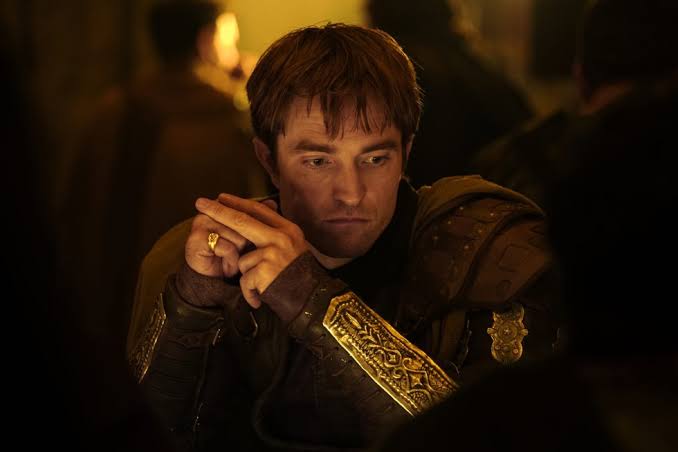
The worst of the suitors is perfectly embodied by Robert Pattinson. Wow. We love to hate this guy. What perfect casting. Which leads us to a controversy. I’ve heard a lot of people took issue with the casting choices. I for one, disagree. I loved the cast. The first complaint I heard was that no one was Greek. This is part of a larger conversation about casting. I’d like to say that, fundamentally, putting yourself in someone else’s shoes and taking on that person’s background, struggle, character, pain, personality, tics, etc is called acting. It’s the job of an actor. To see someone transform into someone else. That’s the point. That’s what makes it art. We wouldn’t have seen an Oscar-winning performance from Dustin Hoffman in Rain Man if they had hired an actor with Autism. And I’d argue that I just saw an Oscars-winning performance from Matt Damon as Odysseus. I’ve never seen that man bring more to a role in my life. He was incredible. Did Greek actors have an opportunity to audition for roles in this film? I don’t know. All I know is I couldn’t tear my eyes away from Lupita Nyong’o as Helen. She commanded every scene she was in. Also, in ancient times, the Greek Empire extended not only throughout Greece, but into Europe, the Middle and Far East, Northern Africa, and beyond. So casting a black Helen felt appropriate… to me anyway. Same with Travis Scott. Plus I loved seeing Lupita as the betrayed murderous mother Clytemnestra as a bonus. Powerful.
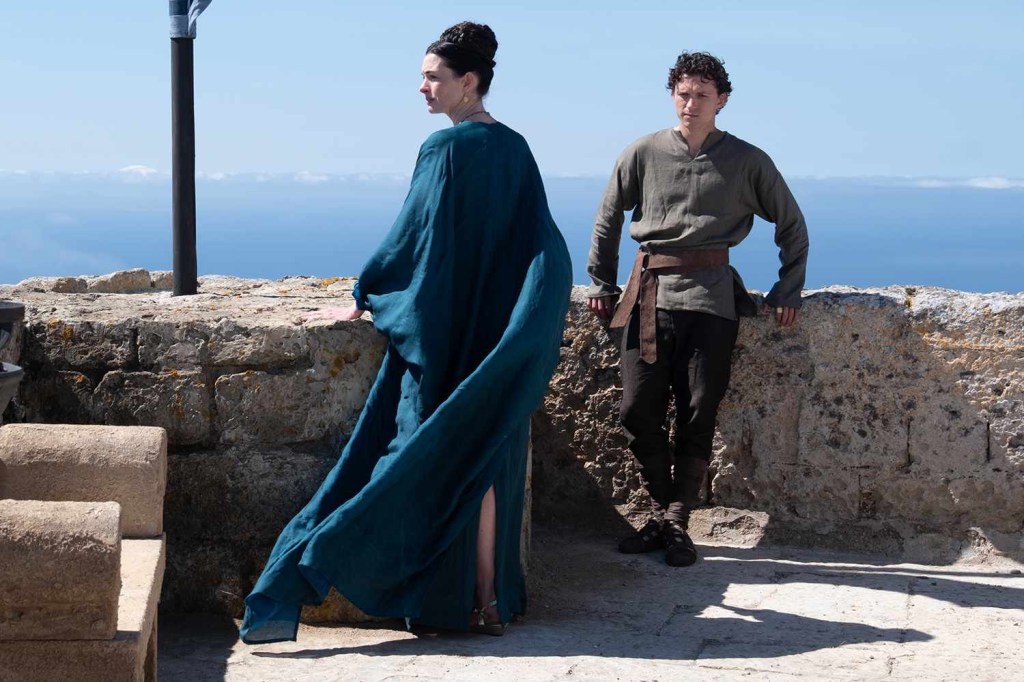
Anne Hathaway as Penelope brought strength to the character that wasn’t in Homer’s original text. Circe’s scenes with Samantha Morton were mesmerizing. Like wow. What a scene. Again – not CGI! Samantha was able to sculpt the pigs in real time on camera and the rest was animatronic!!!
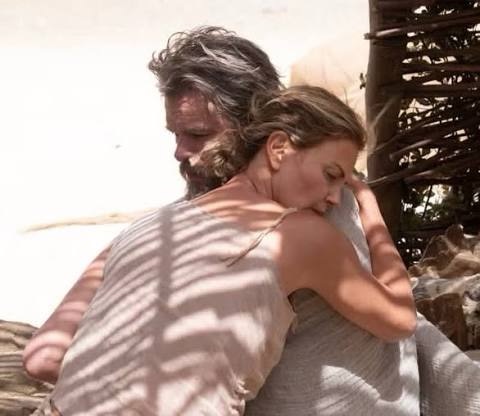
These women’s characters, though not fully developed or super central to the story, were still depicted as strong. Charlize takes on a role of therapist as Calypso. And we see Mia’s difficult position as a slave wanting more out of life in her depiction of Melantho. And of course, Zendaya’s manifestation of Odysseus’s guilt that follows him throughout.
As for the male casting choices, I really liked seeing John Leguizamo as Eumaeus. He’s just such a versatile actor. I also thought Tom Holland was a nice choice for Telemachus.
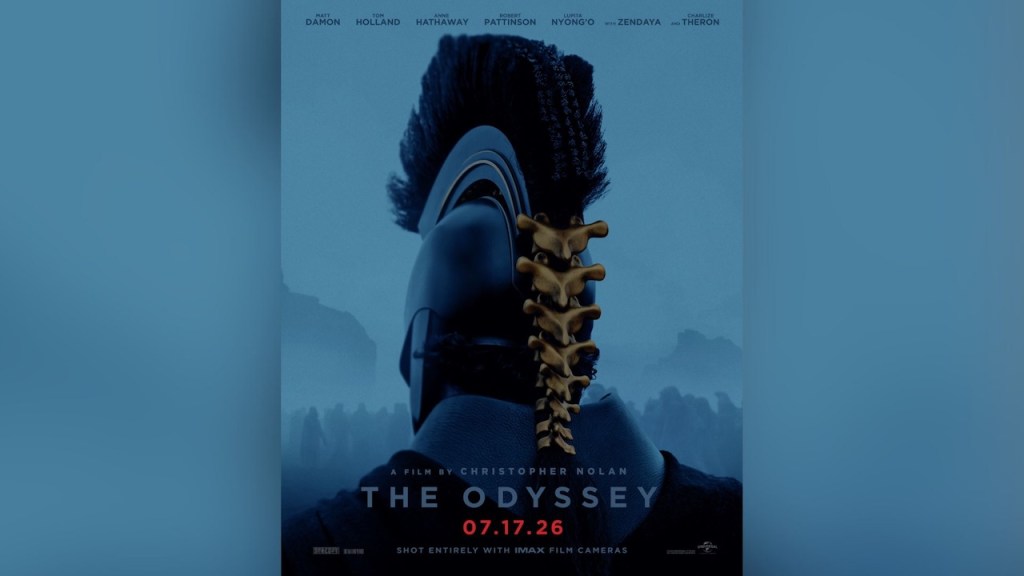
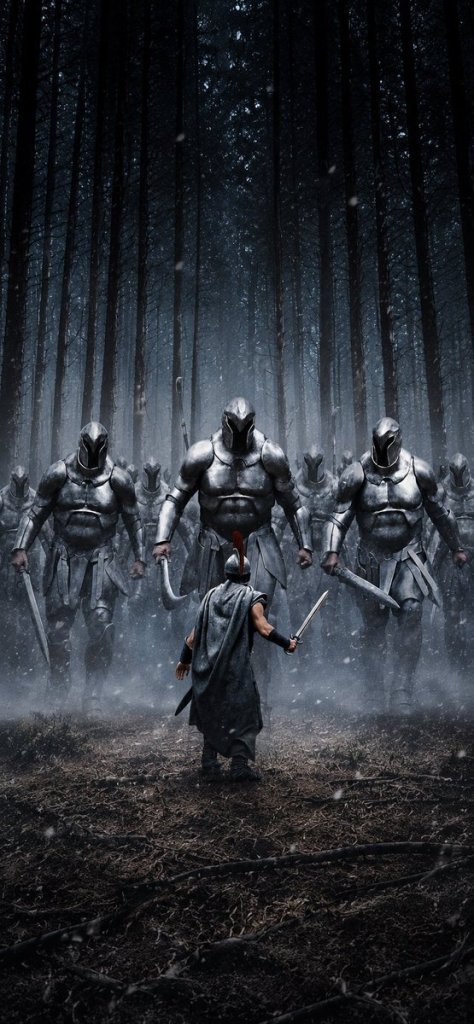
Now, the striking visuals! I loved Agamemnon’s golden spine helmet. Now that’s what I hope to see on everyone’s head come Halloween! And the fact that so much of this was shot practically. The giants on the island were played by actors all over 7 feet tall. And the soldiers – including Odysseus, played by actors at or under 5 feet tall. So the forced perspective shots really paid off. And the Underworld scene. All those actors were actually buried under the sand and breathed through straws until they emerged. What a visually stunning movie. For this reason and all those above, it’s a must-see for me. Go see if you agree.